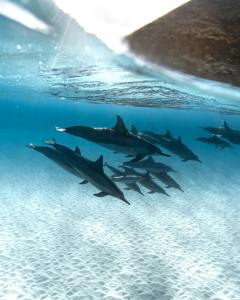
The Dolphin Vocalization & Acoustic Research Project is a science-driven initiative focused on understanding how dolphins use sound within their natural environment and how changing ocean conditions are affecting marine soundscapes.
This project is designed to generate real-world data that supports conservation planning, habitat assessment, and informed decision-making in marine environments.
Research Focus
This research centers on two key areas:
- Dolphin Communication
Studying vocal patterns, frequency ranges, and behavioral context in wild dolphin populations - Marine Soundscapes
Monitoring background ocean noise, including natural and human-generated sources, to understand environmental impacts
Together, these areas provide a more complete understanding of how dolphins interact with and respond to their acoustic environment.
Why This Research Matters
Dolphins depend on sound for nearly every aspect of their lives, including navigation, foraging, and social interaction. As ocean environments change, the acoustic conditions they rely on are being altered in ways that are not yet fully understood.
Increasing vessel traffic, coastal development, and environmental pressures are introducing new and persistent noise into marine habitats, with the potential to disrupt communication and behavior.
This research focuses on documenting those changes and generating data that can be used to:
- Identify patterns in dolphin vocal behavior across different environments
- Assess the impact of human-generated noise on marine ecosystems
- Support evidence-based habitat evaluation and site selection
- Contribute to long-term monitoring of ocean health
Research Methodology
The project uses non-invasive, field-based data collection methods designed to minimize disturbance while capturing accurate environmental information.
Methods include:
- Passive acoustic monitoring using hydrophones
- Environmental data collection (temperature, salinity, pH)
- Weather and habitat condition tracking
- Comparative analysis across locations and time periods
- Broader soundscape monitoring (including fish, shrimp, and vessel noise)
All data collection follows ethical wildlife observation standards.
Field Research Approach
Research is conducted using a mobile field approach, allowing for data collection across multiple coastal environments rather than a single fixed location.
This approach allows for:
- Flexible deployment of monitoring equipment
- Seasonal and location-based comparisons
- Broader environmental data collection
- Adaptive research based on real-time conditions
Current Status
The project is currently in the equipment acquisition and preparation phase.
This includes:
- Finalizing research equipment setup
- Preparing for field deployment
- Planning initial data collection locations
Field data collection will begin following equipment calibration and deployment readiness.
Project Purpose
This research is designed to support a deeper scientific understanding of dolphin behavior while contributing to broader marine conservation efforts.
The data collected will be used to:
- Support habitat evaluation and environmental assessments
- Contribute to long-term conservation planning
- Provide a scientific foundation for future marine initiatives

